


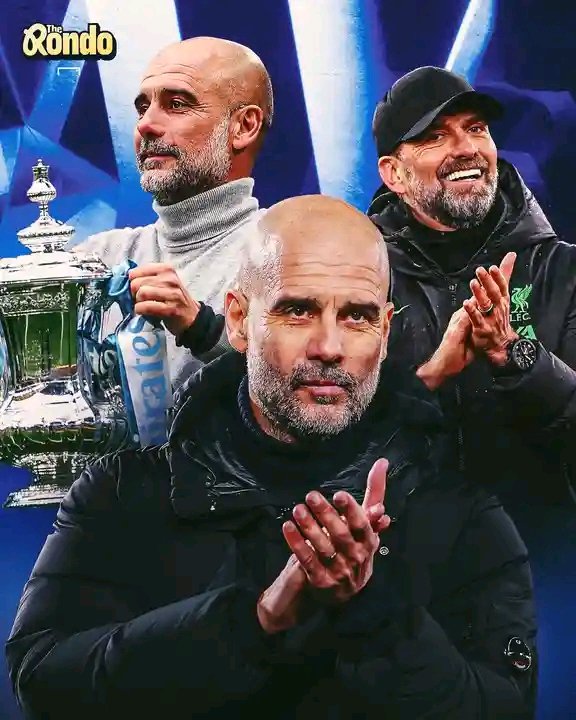
Pep Guardiola’s impact on English football has become one of the most defining narratives of the modern era. Since taking charge of Manchester City in 2016, the Spanish manager has not only delivered unprecedented domestic success but has also reshaped the tactical identity of the Premier League. His legacy is now widely discussed across three major questions: what his true footballing impact is, whether Jürgen Klopp was his greatest rival, and if he deserves to be regarded as the greatest manager in Premier League history.
Guardiola arrived in England with a reputation already built at Barcelona and Bayern Munich, but his time at Manchester City has elevated his status to new heights. He inherited a talented squad but transformed it into one of the most dominant football machines ever seen in English football. His philosophy of positional play, structured possession, and tactical discipline introduced a new standard that forced the entire league to evolve.
At the core of Guardiola’s success is his ability to control matches through structure rather than chaos. His teams are designed to dominate possession, dictate tempo, and restrict opponents from playing their natural game. Manchester City under Guardiola became known for suffocating control, intelligent pressing, and highly coordinated attacking movements that leave little room for defensive error.

This approach delivered immediate success, but more importantly, it created consistency. Manchester City evolved into a team capable of winning league titles through sustained dominance rather than short bursts of form. Multiple Premier League titles, domestic cups, and record-breaking point totals cemented the club as the defining force in English football over the past decade.
One of the most significant aspects of Guardiola’s legacy is how he influenced the entire Premier League. His tactical innovations forced rival clubs to adapt or risk being left behind. Concepts such as inverted full-backs, false defensive midfielders, and fluid positional rotations became increasingly common across English football, showing how deeply his ideas reshaped the game.
Perhaps the most compelling chapter of his English career has been his rivalry with Jürgen Klopp. Klopp’s Liverpool presented the perfect contrast to Guardiola’s structured possession-based football. While Guardiola built control through passing and positional superiority, Klopp relied on intensity, counter-pressing, and rapid transitions.
The battles between Manchester City and Liverpool between 2018 and 2022 are now regarded as some of the greatest title races in Premier League history. In several seasons, City and Liverpool pushed each other to extraordinary levels, often finishing with record-breaking points totals. Despite Liverpool’s brilliance, Guardiola’s City frequently edged the title by the smallest of margins, highlighting just how finely balanced the rivalry was.
Klopp’s presence is often credited with pushing Guardiola to evolve further. City’s tactical system became more flexible over time, incorporating greater physicality, faster transitions, and increased directness when required. This evolution helped Guardiola remain dominant even as the league grew more competitive.
A major milestone in Guardiola’s legacy came with Manchester City’s long-awaited Champions League triumph in the 2022–23 season. The victory completed a historic treble and removed the final major criticism that had followed him in England. With that achievement, Guardiola secured his place among the few managers to have dominated both domestic and European football simultaneously.
Despite this success, the debate over whether Guardiola is the greatest manager in Premier League history remains unresolved. Supporters argue that no other manager has revolutionised English football in the way he has. His tactical innovations, consistency in winning titles, and ability to evolve his system year after year place him at the very top of modern coaching excellence.
Critics, however, point to the resources available to him at Manchester City and compare his achievements with Sir Alex Ferguson, whose longevity and dominance across multiple eras remain unmatched. Ferguson built dynasties over decades, while Guardiola has produced concentrated periods of tactical perfection and dominance.
What makes Guardiola’s legacy particularly fascinating is that it continues to evolve. Even after years of success, he continues to refine his system, experiment with new tactical ideas, and adapt to changing football dynamics. His teams are never static, always shifting in response to opponents, trends, and personnel changes.
Beyond trophies and statistics, Guardiola’s influence extends into the broader culture of football coaching. Many modern managers across Europe now adopt elements of his philosophy, from structured build-up play to positional overloads in midfield zones. His methods have become a reference point in coaching education worldwide.
In the end, Pep Guardiola’s legacy in English football cannot be defined by a single comparison or rivalry. It is a combination of dominance, innovation, and transformation. Whether or not he is ultimately judged as the greatest Premier League manager of all time, his influence has already permanently changed the way football is played and understood.
His story in England is still being written, but his impact is already secured in football history. The Guardiola era at Manchester City represents not just success, but a revolution that continues to shape the modern game.




