


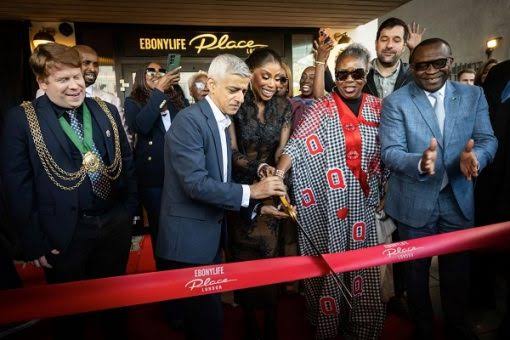
Nigerian media entrepreneur Mo Abudu has unveiled EbonyLife Place London, a new cultural centre featuring a cinema dedicated exclusively to African and Black films, in a move aimed at giving African filmmakers greater control over how their stories are told.
The project, located in south-west London near Nine Elms, reflects Abudu’s ambition to create a permanent home for African cinema and Black storytelling in the United Kingdom. The centre is scheduled to welcome the public this weekend, with its launch attracting attention from the film and cultural industries.
Abudu, founder of EbonyLife Media, said the idea was shaped partly by her personal experience growing up in England, where she recalled struggling to find cinemas screening Black films.
“I could never go anywhere during my youth and watch a black movie,” she said, reflecting on the lack of representation she experienced.

Her experience helped fuel her determination to establish a space where African filmmakers could showcase their work without depending entirely on existing platforms and cinema networks to reach audiences.
Speaking about the motivation behind the project, Abudu stressed the importance of telling African stories from an African perspective.
“It’s time to tell our own stories,” she said, explaining her desire to showcase African creativity and celebrate the continent’s achievements.
The centre’s main attraction is the Amani Auditorium, a cinema featuring red seating, wood panelling and warm lighting. Its programming is expected to include films from across Africa, Nollywood productions and other works celebrating Black actors, filmmakers and experiences.
Abudu has also indicated that the venue will not be limited to Nigerian productions. Films from different African countries and filmmakers across the diaspora will have opportunities to reach audiences, including works by established directors and emerging talents.
Beyond cinema, EbonyLife Place London is designed as a broader cultural destination. The multi-storey venue includes a restaurant, bar, lounge, boutique featuring African and diaspora designers, and an art gallery showcasing works from across the continent. Plans also include industry conversations, masterclasses, live performances and other creative events.
The project follows the launch of EbonyLife Place in Lagos in 2019 and extends the brand’s cultural and entertainment ambitions into the British market. Reports indicate that the London development was financed almost entirely by Abudu’s media group.
For the entrepreneur, the goal is not to isolate African cinema from mainstream platforms but to address what she sees as a persistent shortage of spaces where Black stories can be presented and celebrated on their own terms.
She has described the venue as a safe space for African and Black creativity while emphasising that membership will be open to people of all backgrounds.
Abudu has also expressed interest in replicating the concept in other cities, including Paris, potentially through partnerships.
The London project represents a significant step in her broader effort to expand the international reach of African entertainment. By bringing film, fashion, food, art and live experiences under one roof, she hopes to create an environment where audiences can engage more deeply with African culture.
As EbonyLife Place London prepares to welcome visitors, its long-term impact will depend on the films it showcases, the filmmakers it supports and its ability to attract audiences beyond the African diaspora.
For Abudu, however, the central ambition is clear: African creatives should not have to wait for others to create opportunities for their stories. They can build the spaces themselves and invite the world in.




