
Analysis
The Coup That Dare Not Speak Its Name
By Farooq Kperogi

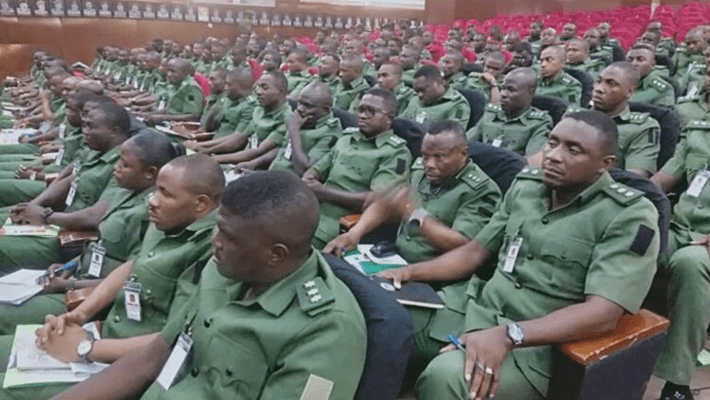
I was initially disinclined to write about the alleged attempted coup to dislodge President Bola Ahmed Tinubu from power because the Defence Headquarters (DHQ) has publicly denied it and characterized news reports suggesting that it did happen as “false and misleading.”
News of the coup attempt was first exclusively reported by Sahara Reporters. The report came two weeks after the Director of Defense Information, Brigadier General Tukur Gusau, signed an October 4 news release that said 16 officers had been arrested and would face “military justice” over “issues of indiscipline and breach of service regulations.”
The military’s investigations, Gusau said, found that the 16 officers’ grouse “stemmed largely from perceived career stagnation cause by repeated failure in promotion examination, among other issues.”
That, at first glance, appeared to be an ordinary disciplinary matter. Armies, like all bureaucracies, struggle with ambition, thwarted aspirations, and internal politics.

Sahara Reporters took that explanation and detonated it. The platform reported that the detained officers were not disgruntled mid-career soldiers sulking over promotion bottlenecks. They were alleged coup plotters. Then things escalated.
Then things escalated. Premium Times, which is famous for exercising editorial restraint and avoiding sensational political speculation, confirmed the thrust of the report. “The report is true,” Premium Times quoted a “military source familiar with the matter” to have told them.
Daily Trust independently corroborated the same details. Both could not have lightly risked their reputational capital by echoing Sahara Reporters without high-confidence sourcing.
Premium Times even repeatedly amplified its story across social platforms in a manner that signaled editorial certainty rather than sensational opportunism.
But beyond throwing around lazy, sterile, stereotyped, ready-made adjectives to dismiss the report of the coup, the Defense Headquarters hasn’t said anything of substance to dispute the facticity of the reports about the coup. No counter-facts. No evidence contradicting the reporting. Denial, in institutional crises, loses persuasive power when it fails to offer credible, granular alternative explanations.
The implausibility of the denials reached comedic levels when authorities attempted to explain President Tinubu’s abrupt cancellation of Nigeria’s Independence Day parade. They claimed the president needed to attend a sudden, unspecified bilateral meeting abroad and that the parade would distract the Armed Forces of Nigeria from fighting terrorism and banditry.
That justification collapsed under the most cursory scrutiny. Independence celebrations do not jeopardize counter-insurgency operations. Moreover, no emergency diplomatic engagement materialized that week. Institutions do not peddle obvious falsehoods to hide nothing. The more laughable the cover story, the more likely the secret is real.
Matters intensified when Sahara Reporters released the names of the alleged plotters. Premium Times and Daily Trust again verified key elements of the revelation. The Defence Headquarters, usually swift to debunk anything unflattering, stayed mute. Silence, in this context, was not golden. It was incriminating.
Then came the political earthquake: President Tinubu dismissed and reshuffled top military leadership. The timing was too convenient to be coincidence. Reshuffling service chiefs in the immediate aftermath of coordinated reporting on a coup attempt looks less like routine personnel management and more like crisis containment. These clocks do not run independently. They strike in synchrony.
One additional ripple deepened the intrigue. Sahara Reporters disclosed that security forces raided the home of a former governor, Timipre Sylva, on suspicion of involvement in the alleged plot. His spokesperson confirmed the raid.
Nothing further illuminates the seriousness of a situation than the government’s decision to search the home of a former senior federal official who is close to the northern political establishment.
The logical inference, supported by mounting circumstantial evidence, is that Nigeria experienced a coup attempt that did not reach critical mass. The authorities are managing information not to reassure the public, but to avoid panic, prevent copy-cat adventurism, and preserve a veneer of stability for investors and international partners. Political communication by the state has been characterized by opacity rather than candor.
But the surface drama pales beside the subterranean danger. The ethnic and religious composition of the alleged conspirators raises existential questions about Nigeria’s fragile national fabric. Media reports indicate that the detained officers are overwhelmingly northern Muslims from Niger, Nasarawa, Katsina, Gombe, Bauchi, and Jigawa, with only two officers from Plateau and Delta States breaking the pattern.
Whether this distribution emerged by coincidence or design hardly matters. Perception often outweighs empirical truth in moments of national strain.
Had the coup succeeded, Nigeria would have sleepwalked into catastrophe. The South would have interpreted it as a northern Muslim repudiation of a southern presidency. Old suspicions, suppressed but never extinguished, would have surged back into public consciousness.
It would have felt like June 12, 1993 revisited, only with uniforms and guns instead of decrees and judicial machinations. The last time Nigeria faced a crisis of southern electoral legitimacy invalidated by military fiat, the nation nearly splintered.
Peace was restored only when northern elites agreed that a Yoruba president was necessary to stabilize the federation in 1999. That moment, painful and imperfect, was a rare episode of elite consensus for national survival.
A northern-led coup against a Yoruba president today would have ignited resentments more combustible than those of the 1990s. The wounds of June 12 have not fully healed because symbolic injustices linger long after material conditions improve.
Nigerians may be suffering intolerable hardship and spiraling insecurity today, yet economic distress does not erase group memory or neutralize grievance politics. People seldom tolerate perceived humiliation of their collective identity, even when their pockets are empty. In crises framed as existential, identity routinely overwhelms material interests.
This is the cardinal danger that the authorities appear eager to downplay. Nigeria is not merely a geographical expression, to borrow Chief Obafemi Awolowo’s once-controversial phrase. Nigeria is a precarious compact among ethnicities, religions, histories, and anxieties.
Military adventurism, when layered upon identity fault lines, becomes political arson. It is not an assault on one administration. It is an assault on the delicate architecture that keeps the republic intact.
This moment demands two sober reflections.
First, the military must confront its internal contradictions, promotion culture, and factional tensions transparently and responsibly. Armed forces that cannot discipline discontent ethically and lawfully inadvertently invite disloyalty and adventurism. The aborted plot is only a symptom.
Second, the government must resist the reflex to smother inconvenient truths. Secrecy accelerates suspicion. Nigeria’s citizens have matured politically; they can process national challenges without descending into chaos. Shielding the public from reality infantilizes the electorate and breeds cynicism.
Federal cohesion today rests on credibility rather than coercion. The Nigerian constitution is only as strong as the public trust that undergirds it. Democratic legitimacy cannot be defended with half-truths and clumsy denials. It must be upheld with transparency and accountability.
Something serious happened in those barracks. Nigerians can feel it in the tone of the denials, the choreography of the shake-ups, the eerie quiet of usually voluble institutions. The government’s instinct to suffocate the story is understandable, yet it is also counterproductive. The more the truth is suppressed, the more combustible it becomes.
The great paradox of power is that strength grows from candor, not concealment. Nigeria has survived crises more convulsive than this one. It can survive this, too. Survival requires confronting the truth head-on, acknowledging the fissures, and recommitting to democratic stability as a non-negotiable national imperative.
A nation that tiptoes around its dangers invites its downfall. A nation that stares them in the face earns its future. Let Nigeria choose the latter.

Mrs. Elizabeth Onike, a 96-year-old voter, lamented bitterly after being denied the right to cast her vote in Anambra State.
The elderly woman said she arrived at her polling unit early, determined to perform her civic duty despite her age, but was turned away by officials for reasons yet to be made clear.
Diaspora Digital Media (DDM) gathered that the incident occurred in one of the polling units in Awka, where several elderly citizens also complained about similar challenges.
Eyewitnesses said Mrs. Onike, visibly emotional, expressed disappointment that despite enduring long hours and braving the heat, she was prevented from voting.
Observers have called on the Independent National Electoral Commission (INEC) to investigate the incident and ensure the rights of senior citizens are respected in future elections.
Many social media users have since rallied around her, describing her experience as “heartbreaking” and “a sad reflection of voter disenfranchisement.”
#AnambraDecides2025 #DDMReports #VoteNotFight
By Ofonime Honesty
Let us speak truth to power. The Akwa Ibom Broadcasting Corporation (AKBC) has been on life support in recent years.
We have watched the infrastructural retrogression of that great breeding ground where the finest crop of broadcasters in this region cut their teeth. They were drilled in excellence, and their voices informed, educated, and united us.
This was not just a mere decline; it was a monumental failure we all witnessed unfold. AKBC wobbled even as newer broadcast stations lured her talents away.
But wait. Pause the lamentations!
Governor Umo Eno has signed an agreement with Media Guru Consultant, LLC, of Dubai, for the transformation of the station into a “world-class broadcasting entity.” This is no mere project; it is a rescue mission. It represents the political will to snatch a vital asset from the greedy jaws of oblivion.
This partnership with Media Guru Limited covers consultancy, design, procurement, and installation of advanced broadcast equipment, which will position AKBC to compete favorably with leading broadcast stations within and outside Nigeria.
For context, Media Guru is not a faceless consultant. Independent checks by yours truly indicate that it is a global media services company offering solutions in content digitization and preservation, turnkey technology projects, and digital media, with physical offices in the UAE, Singapore, South Africa, and India.
With over 21 years in service, over 64 projects completed, and successful jobs in over 20 countries, the firm possesses the qualifications and expertise for this project.
TVC, Huawei, Bloomberg Africa, Raj TV, Daily Independent, ConSat TV, News Live TV, and several others are notable clients of the firm.
In this age of digital journalism, a feeble broadcaster is a mute spectator. AKBC cannot tell the Akwa Ibom story properly with a broken microphone, a broken camera, and dilapidated transmitters.
Its employees cannot counter toxic narratives while operating from a studio that leaks rain.
Look around you. Our airwaves are being invaded by content that erodes our identity.
Our people are being fed junk content while the rich banquet of our own heritage gathers dust. AKBC was supposed to be the gatekeeper of our stories, the guardian of our values. Instead, it became a sleeping giant while others came in and colonized our narrative space. The Akwa Ibom story must now be told by AKBC. That task is compulsory!
The Governor has thrown a lifeline. Funding will not be a problem. The burden now falls squarely on AKBC’s management and staff. The management must undergo a mental revolution. They must purge the system of deadwood and complacency. Training and retraining are essential. The modern gadgets and facilities must not be destroyed by analogue hands.
We cannot pour new wine into old wineskins. They must recruit fresh talent with fire in their bellies and innovation in their blood. Anything less would be a betrayal of this second chance.
This new studio must become a fortress of truth, a hub of cutting-edge programming, and a stage for the next generation of trailblazers. AKBC has to move with the times. Archaic or out-of-fashion programming must cease.
We are watching. The people are watching. History is watching. The contract is signed. The gauntlet has been thrown. AKBC, a Lazarus, must rise!
Nigeria’s online and offline discursive arenas have been suffused with frenetic, impassioned, and intensely heightened dialogic exchanges in the aftermath of President Donald Trump’s designation of Nigeria as a “Country of Particular Concern” and this threat to militarily invade the country to stop what he called a “Christian genocide.”
Nigerians are predictably divided largely along the country’s familiar primordial fissures. But beyond the surface disagreements, there’s actually a deeper congruence of opinions we miss in moments of hyper-aroused emotions. And this revolves around the recognition that Nigeria faces an inexcusable existential threat from the intractable murderous fury of terrorists and that the earlier it is contained by any means necessary, the better Nigeria’s chances of survival.
The major areas of disagreement among conversational sparring partners (i.e., whether, in fact, there’s a Christian genocide; what really actuates Trump’s intervention; the question of what foreign intervention means for Nigeria’s sovereignty) actually have a convergence point.
For example, Muslims who question the factual accuracy of the existence of a Christian genocide in the central states point to the continuing mass slaughters of Muslims (both at home and in mosques) in the far north. But they don’t deny that the nihilistic, blood-thirsty thugs who murder both Christians and Muslims in their homes and places of worship identify as Muslims, even if they are a poor representation of the religion they identify with.
I honestly struggle to fault Christians who perceive the episodic mass murders in their communities by people who profess a different faith from them as deliberate, systematic, premeditated acts designed to exterminate them because of their faith.
If the situation were reversed, it would be perceived the same way. If murderous outlaws who profess the Christian faith (even if they don’t live by the precepts of the religion) continually commit mass slaughters of both Christians and Muslims, Muslim victims of these slaughters would instinctively read religious meanings to the murders.
As I noted in my April 12, 2025, column titled “Selective Outrage Over Mass Murders in Nigeria,” human beings derive their sense of self from belonging to collective identities, so when members of an out-group attack that collective, it provokes a powerful emotional reaction.
Even in such states as Zamfara, Sokoto, and Katsina, where more than 90 percent of the population is Muslim and where clashes between sedentary farmers and itinerant herders are age-old, the persistence of mass slaughters has ruptured the centuries-old ethnic harmony between the Hausa and the Fulani that Nigerians had taken for granted. BBC’s July 24, 2022, documentary titled “The Bandit Warlords of Zamfara” captures this dynamic powerfully.
It doesn’t matter if people in the Middle Belt perceive the homicidal ferocity of the terrorists as “Christian genocide” or people in the Northwest see it as “ethnic cleansing.” What matters is that they shouldn’t be allowed to kill anyone.
I understand Muslim anxieties behind the “Christian genocide” narrative. It unwittingly exteriorizes the crimes of a few outlaws to the many who are also victims of the outlaws’ crimes. But if it takes calling these blood-stained bastards “Christian genocidaires” to eliminate them, the accuracy of the description is immaterial. If an equal-opportunity murderer of Christians and Muslims is killed only because he kills Christians, it still benefits Muslims because the murderer won’t be alive to kill Muslims.
Of course, people who question Trump’s motive are justified. In 2016, Trump enthusiastically endorsed Ann Coulter’s book Adios America, which claimed that the growth of Nigerians in the United States from virtually zero to 380,000 was problematic because, in her words, “every level of society [in Nigeria] is criminal.” Most Nigerians in the United States are Christians.
By December 2017, in his first term, Trump was reported to have said that people from Haiti and Nigeria should be denied visas because “15,000 Haitians who received U.S. visas all have AIDS,” and that 40,000 Nigerians who visited the U.S. that year would never “go back to their huts” after seeing America.
In January 2018, he was widely quoted as saying he didn’t want immigrants from “shithole countries” like Nigeria and Haiti but preferred “more people coming in from places like Norway,” a statement that made clear his racial preference for white immigrants.
That same racial logic was evident when he described white South Africans as victims of “white genocide” and offered them asylum but has not extended the same offer to Nigerians he claims are facing “Christian genocide.”
Unsurprisingly, by 2019, toward the close of his first term, Nigeria experienced the steepest decline in visitors to the United States of any country, according to data from the National Travel & Tourism Office.
Given this record, skepticism about Trump’s sudden concern for Nigeria is entirely warranted. Anyone familiar with his long-documented hostility toward Black people would reasonably question why he now professes to care enough about them to “intervene” on their behalf.
His intervention is probably the product of three forces: powerful lobbying from Nigerian Christian groups who got through to the right people, a way to get Nigeria to scale down its embrace of China in the service of rare earth mineral exploration in the country, and an appeal to his evangelical Christian base even if he himself isn’t a believing, churchgoing Christian.
But given the direness of the depth and breadth of bloodletting in the country, who cares what his motivations are? If Trump’s intervention causes the Nigerian government to more seriously take its responsibility to protect all Nigerians, I would salute him. In fact, if direct, targeted hits at terrorist enclaves become inevitable because the government is either unwilling or unable to act, most people (Muslims, Christians, southerners, northerners, supporters or critics of the government, etc.) who are genuinely worried about the unchecked expansion of the theaters of insecurity in the country would be happy.
When it comes to questions of life and death, we can’t afford the luxury of pointless partisanship and primordial allegiances. Most Nigerians I know would accept help from Satan if that were what it would take to stop the unending blood-stain communal upheavals in the country.
What is the point of our sovereignty if we can’t stop perpetual fratricidal bloodletting? In any case, most Nigerian governments and opposition politicians in my lifetime have not only routinely sought America’s intervention in Nigeria’s internal affairs when it suits them, they serve as willing informants to America, leading me to once posit that the CIA doesn’t need secret agents.
In a May 20, 2017, column titled, “Xenophilia, Fake Sovereignty and Nigeria’s Slavish Politicians,” I said the following:
“Many Nigerian leaders seem to have an infantile thirst for a paternal dictatorship. The United States is that all-knowing, all-sufficient father-figure to whom they run when they have troubles. We learned from the US embassy cables that our Supreme Court judges, Central Bank governors … and governors routinely ran to the American embassy like terrified little kids when they had quarrels with each other.”
If the undermining of our sovereignty is what it would take to provide peace to everyday Nigerians, most people won’t miss it.
The urgent task, therefore, is not to litigate the purity of motives abroad or to indulge in perfunctory moralizing at home, but to force Nigerian institutions to perform. Whether pressure comes from international actors, diasporic lobbying, or domestic outrage, it must translate into concrete reforms: a security strategy that protects civilians, accountable and professional security forces, transparent investigations of atrocities, and long-term efforts to address the economic, political, and environmental drivers of violence.
Nigerians must insist that any external attention be channeled into strengthening the state’s capacity to protect all citizens and into justice for victims, not into new forms of dependency or political theatre. Only by combining unity of purpose with institutional competence can Nigeria begin to end the killing and reclaim the dignity of its sovereignty.
-
Analysis6 days agoEmpty Diplomacy, Real Graves… A Reply to Nigeria’s Ministry of Foreign Affairs
By Sa'adiyyah Adebisi Hassan
-
World News6 days agoMilitary action on terrorists in Nigeria could be ground troops, air strikes — Trump
-
News5 days agoJUST IN: Soldiers facing terror allegations escape from military custody
-
World News4 days agoI will name Nigerian officials linked to Christian genocide — Senator Ted Cruz
-
Economy5 days agoCBN Releases Names Of Heavy Defaulters, Amount
-
Opinion7 days agoWhen the Hunter Becomes the Hunted: How the APC is Tasting the Karma of 2015
-
News5 days agoDon’t Bomb Bandits, Negotiate With Them – Islamic Cleric Tells US
-
News3 days agoBREAKING: Nnamdi Kanu writes Trump, calls for US inquiry in S’east killings
-
World3 days agoUS Congress Introduces Nigeria Religious Freedom Accountability Bill
-
Analysis6 days agoChristian Genocide: Fellow Muslims — Let’s Face Facts
By Sa'adiyyah Adebisi Hassan

