


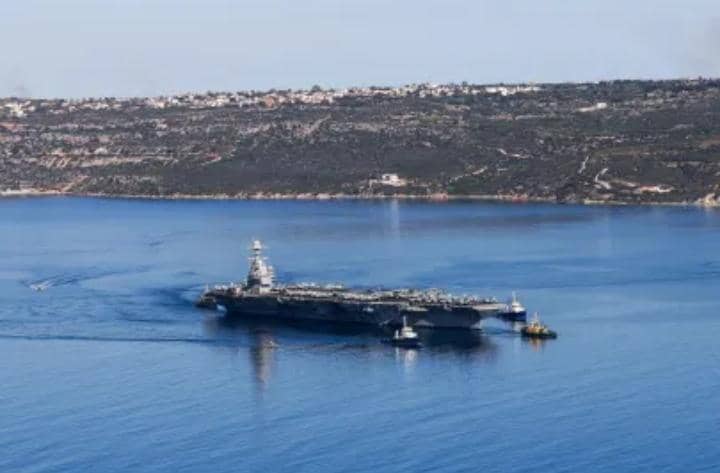
(DDM) – The USS Gerald R. Ford, the United States Navy’s most advanced aircraft carrier, has temporarily withdrawn from operations linked to the ongoing Iran conflict following a fire incident onboard. The vessel is now heading to a naval base in Crete for repairs, according to a US official familiar with the situation.
The fire reportedly broke out in the ship’s laundry area last week, prompting safety protocols and internal damage assessments. While officials have not disclosed the full extent of the damage, the decision to move the carrier away from active deployment suggests concerns over operational readiness and crew safety.
The withdrawal comes at a critical moment, as US military operations targeting Iranian threats in the region remain active. The aircraft carrier had been playing a key role in supporting air operations, serving as a launch platform for fighter jets involved in efforts to secure vital shipping lanes, particularly in the Strait of Hormuz.
Military analysts say the temporary removal of such a high-value asset could impact operational flexibility in the region. Aircraft carriers like the USS Gerald R. Ford are central to US naval strategy, offering rapid deployment of air power without reliance on foreign bases. Its absence, even temporarily, may require adjustments in tactical planning and resource allocation.

The Strait of Hormuz, a crucial maritime route for global oil shipments, has been a focal point of tension amid the ongoing conflict involving Iran, the United States, and its allies. Ensuring safe passage through this waterway remains a top priority for Washington, as disruptions could significantly affect global energy markets.
Experts explain that incidents such as onboard fires, even when contained, can have serious implications for complex naval systems. Modern aircraft carriers rely on highly integrated technologies, and even minor disruptions can require extensive inspections and repairs to maintain operational standards.
The US Navy has emphasized that the move is precautionary and does not signal a broader reduction in military commitment to the region. Other naval assets and air capabilities remain active, ensuring continuity in operations aimed at countering Iranian threats and maintaining regional stability.
Historically, aircraft carriers have occasionally been forced to withdraw from missions due to technical issues or accidents. However, such developments often attract heightened attention when they occur during active military engagements, as they can influence both strategic calculations and public perception.
Security analysts note that the incident highlights the challenges of maintaining sustained military operations in high-tension environments. While the US maintains a strong naval presence globally, unexpected technical issues can test readiness and adaptability.
As repairs begin in Crete, officials are expected to conduct a thorough review of the incident to prevent future occurrences. The timeline for the carrier’s return to active duty remains unclear, but its eventual redeployment will likely be closely watched given its strategic importance in the ongoing conflict.




