


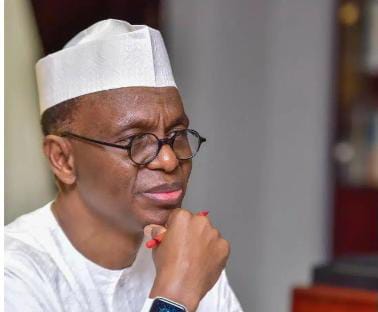
(DDM) – Former Kaduna State governor, Nasir El-Rufai, has openly challenged Nigeria’s anti-corruption posture, declaring that members of the ruling All Progressives Congress, APC, appear immune from corruption allegations.
Speaking on Thursday in Abuja, El-Rufai delivered the remarks at the 23rd edition of the Daily Trust Dialogue, a high-level policy forum focused on national governance.
(DDM) – The former governor used the platform to warn that Nigeria is drifting dangerously toward selective accountability, where political alignment determines who faces scrutiny and who enjoys protection.
El-Rufai argued that Nigeria practices governance without real accountability, insisting that reforms have concentrated more on structures and procedures than on measurable outcomes.

He stated that while the country conducts elections, establishes agencies, and announces asset recoveries, true accountability in governance remains uneven and politically influenced.
According to El-Rufai, corruption prosecution has become punitive for opposition figures, negotiable for political defectors, and completely invisible for those aligned with power.
He bluntly asserted that APC members are almost never accused of corruption, a perception he said must be urgently confronted if democracy is to survive.
The former governor warned that selective enforcement of anti-corruption laws produces real and damaging consequences for ordinary Nigerians.
He explained that unpaid salaries, abandoned public projects, collapsing infrastructure, and growing public cynicism all stem from the absence of fair and consistent accountability.
El-Rufai stressed that when laws are enforced selectively, deterrence collapses, and when deterrence collapses, public trust evaporates.
He described Nigeria’s current condition as one where citizens no longer believe that justice applies equally to all, regardless of political affiliation.
The former minister emphasized that restoring confidence requires strengthening institutions rather than empowering individuals.
He specifically called for deep judicial reforms to guarantee credible elections and protect the independence of the electoral commission.
El-Rufai insisted that without an impartial judiciary and transparent electoral system, democratic reforms would remain cosmetic and ineffective.
He concluded by urging Nigeria to restore ethical and competent governance, arguing that politics loses its meaning when integrity disappears.
According to him, reform is not only about introducing new policies but also about ending practices that reward impunity and political loyalty over competence.
The dialogue attracted prominent national figures, reflecting the gravity of the issues discussed.
Among the panelists was the Special Adviser to the President on Media and Policy Communication, Sunday Dare, who represented the federal government’s communication perspective.
Also present was Hon. Nnenna Elendu-Ukeje, former Chair of the Foreign Affairs Committee of the 7th and 8th House of Representatives.
Former Senate President Bukola Saraki chaired the event, lending weight to the deliberations with his legislative experience.
Former Oyo State governor, Rashidi Ladoja, attended as the Special Guest of Honour.
Political analysts say El-Rufai’s comments have reignited debate over whether Nigeria’s anti-corruption fight has become a tool of political convenience.
They argue that his remarks resonate with widespread public frustration over perceived double standards in governance.
As the nation approaches another electoral cycle, critics warn that unresolved issues of selective justice could further erode democratic legitimacy.
El-Rufai’s intervention has now placed renewed pressure on the ruling party to confront accusations that accountability in Nigeria depends on who holds power rather than what the law demands.




