


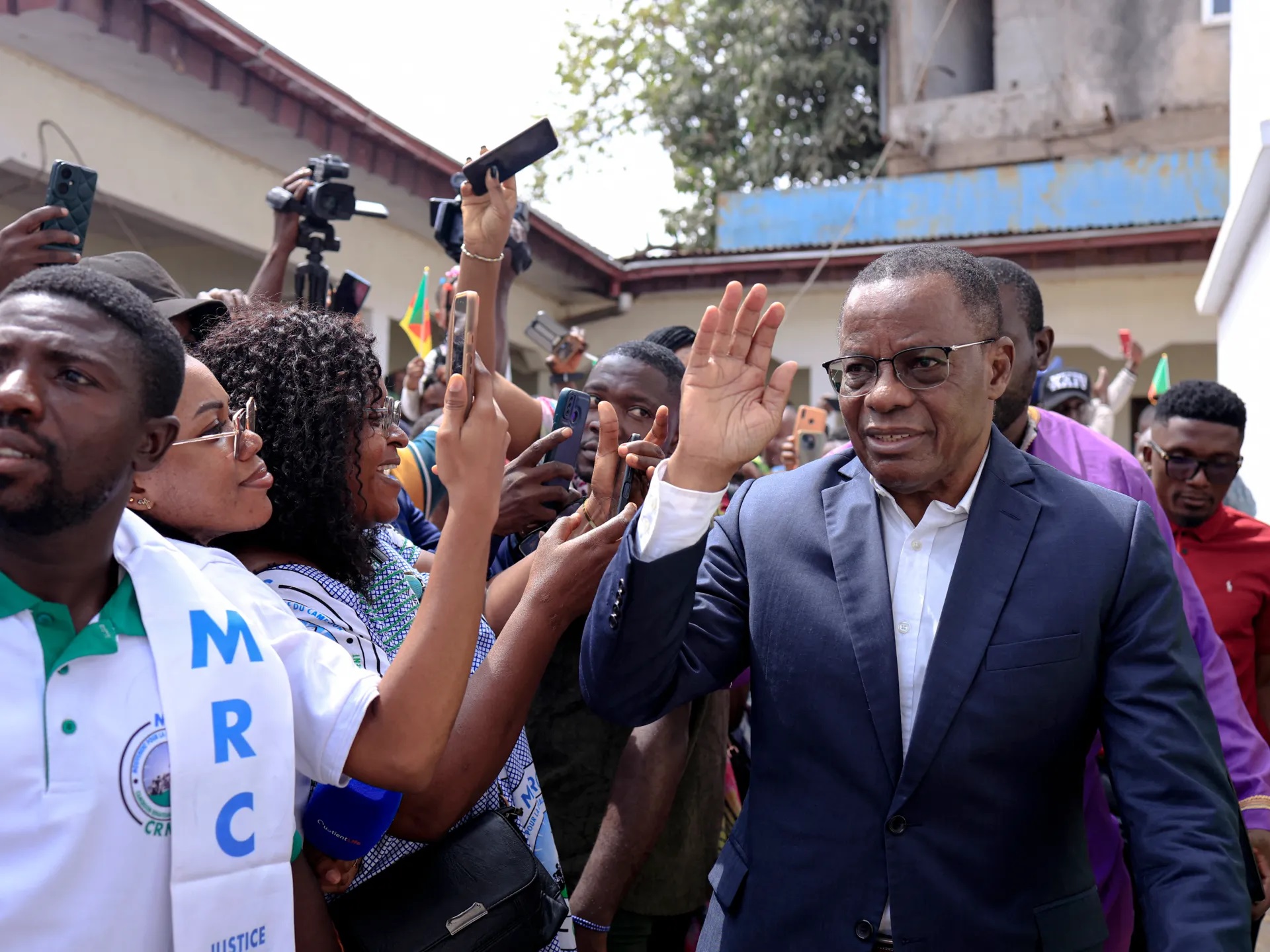
Cameroon’s electoral commission has disqualified Maurice Kamto, a prominent opposition figure and key challenger to President Paul Biya, from contesting in the upcoming presidential election.
The announcement was made on Saturday by the head of the electoral body, Elections Cameroon (ELECAM), raised concerns over the fairness of the process and the possibility of unrest across the country.
It was made during a press briefing where he revealed the names of 13 approved candidates for the October 12 vote.
Notably absent from the list was Kamto, 71, who had officially submitted his candidacy the previous week.
ELECAM did not provide any explanation for Kamto’s exclusion, although individuals not named on the list are allowed two days to challenge the decision through a formal appeal.

Kamto, a former minister and the leader of the Cameroon Renaissance Movement (MRC), was widely regarded as Biya’s most formidable rival.
He had placed second in the controversial 2018 election with 14 percent of the vote.
That election was marred by accusations of widespread fraud and extremely low voter turnout.
In contrast, Biya was declared the winner with over 70 percent of the vote.
Unlike in 2018, when he ran under his own MRC party, Kamto had sought to contest this year’s election as the nominee of the African Movement for New Independence and Democracy (MANIDEM), a leftist party.
His change in party affiliation had raised eyebrows, but his candidacy was still seen as a serious threat to Biya’s decades-long grip on power.
The provisional candidate list’s release triggered heightened political tension and public anxiety.
A total of 83 individuals had submitted their candidacies to ELECAM.
However, with only 13 approved, speculation and frustration mounted, especially among Kamto’s supporters.
Fearing demonstrations and possible civil unrest, security forces were stationed in large numbers around ELECAM’s headquarters and major roads in the capital, Yaoundé, as well as in Douala, Cameroon’s economic center.
The United Nations Department of Safety and Security had issued an alert the day before the announcement, warning that the decision could provoke protests in Yaoundé and surrounding areas.
The final list of approved candidates will be confirmed in the coming days, once all appeals have been reviewed and resolved.
However, the exclusion of Kamto has already cast a shadow over the electoral process, with many questioning its transparency and inclusiveness.
President Biya, now 92, officially declared his intention to run for another term last month, despite ongoing concerns about his age and reported health issues.
Having ruled since 1982, Biya is currently the oldest sitting head of state in the world.
His long tenure has shaped modern Cameroonian politics, but his leadership has also been criticized for its handling of key national issues.
Under Biya’s rule, Cameroon has struggled with numerous challenges.
These included persistent allegations of high-level corruption, economic stagnation, and an ongoing separatist crisis in the country’s English-speaking regions.
The conflict has displaced thousands of civilians, disrupted education for many children, and resulted in hundreds of deaths.
Despite these challenges, Biya continues to maintain a tight hold on political power, with opposition voices often sidelined or suppressed.
The disqualification of Kamto, who has long been a vocal critic of the regime, is likely to further inflame tensions between the government and opposition groups.
Among those approved to contest in the election are:
- Bello Bouba Maigari, a former prime minister and close ally of Biya for nearly three decades, and,
- Issa Tchiroma Bakary, who resigned from his role as minister of employment in June to run for president.
Both candidates are seen by critics as establishment figures unlikely to pose a genuine challenge to Biya’s rule.
As Cameroonians prepare for the October elections, the legitimacy of the process remains under scrutiny, especially with the exclusion of a major opposition leader.
Observers fear the upcoming vote may deepen divisions in an already fragile political landscape, with the potential for instability if concerns about fairness and inclusion are not addressed.



 and then